Deborah and Jael
There’s a familiar saying that we can’t make an omelette without breaking eggs, it holds the feeling of Oh well, guess it had to happen- a sad but necessary evil for the egg.
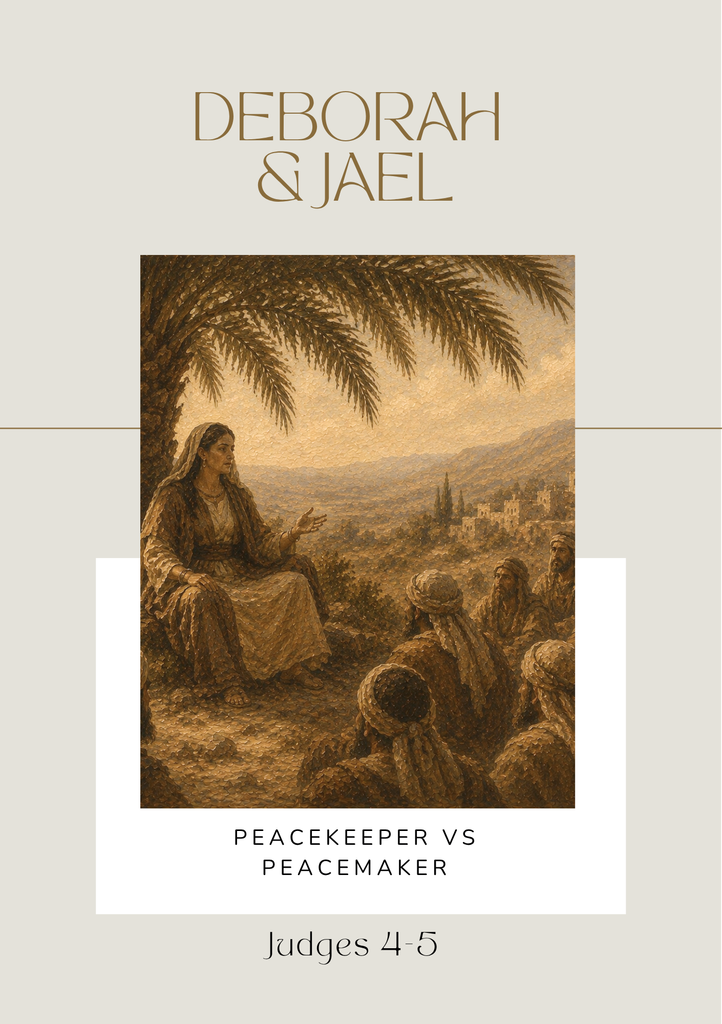
Our woman of the word is Deborah. Deborah is the fourth judge of Israel, prophetess – and the first woman to hold that title.
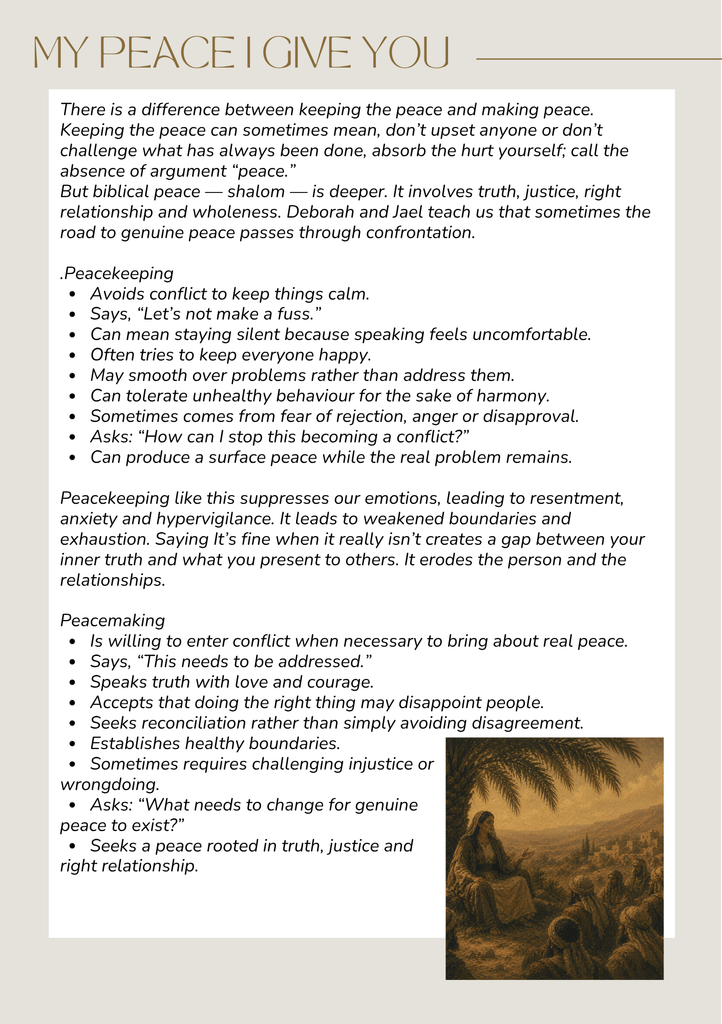
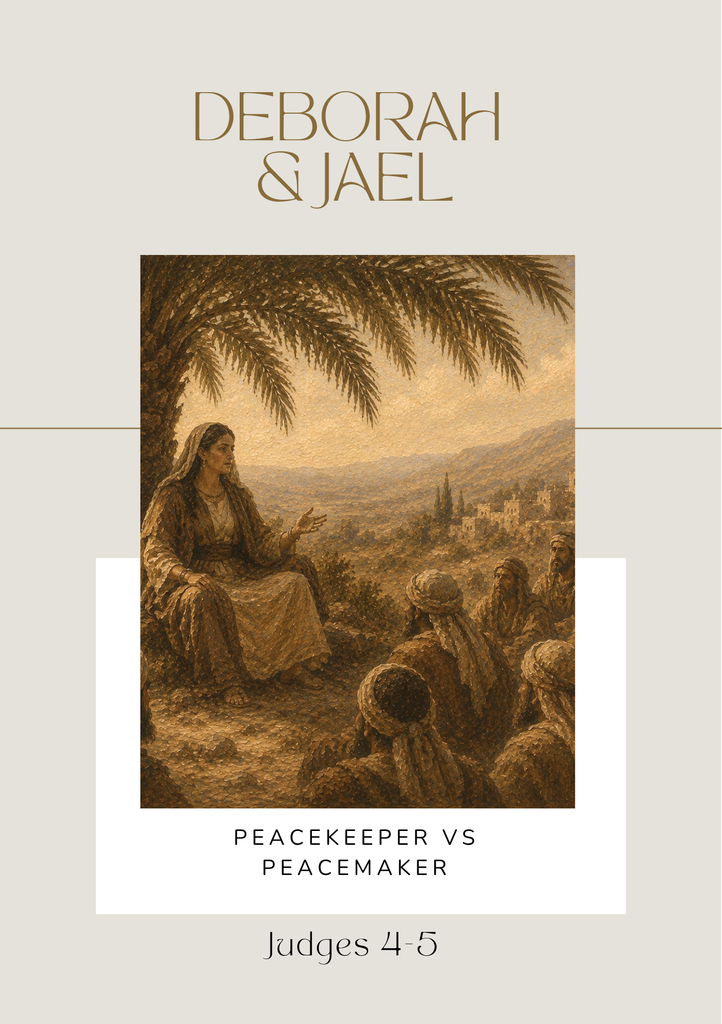
The judge would usually sit and hold court at the entrance to the town, and the villagers would bring their disputes to the judge for Insight and resolution. Deborah however sits under “The palm of Deborah” in between two towns, now this may be practical, she serves both and this works to keep the peace for both sides feeling fairly served.
And that leads us to a theme of the story of Deborah and Jael for me.
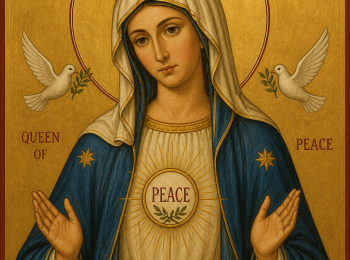
The difference between a peacekeeper and a peacemaker. I wonder if The Lord teaches Deborah the difference here or if she already holds that wisdom. It is the peace-makers we are told will be called the children of God in the beatitudes.
Nothing new in this story, in that Israel have wandered from the Lord again and this time are under the oppression of King Jabin, and his cruel commander Sisera. This is where we find ourselves in Israel’s history.
Day after day Deborah sorts the squabbles of the Israelites – we’ve followed them some time by this point in scripture, so its easy to imagine there are many. She seeks God’s counsel (remember, a prophet is one who speaks for God – a ministry we are all baptised into, anointed to do) and shares the wisdom she hears.
On this particular day God says to her, “Call Barak and tell him now is the time to go to war on our oppressors.”
Deborah does as she hears and summons Barak, the military commander for Israel. He’s not so keen on the plan – perhaps accepting the status quo feels more godly, starting a war, and breaking peace is a risky move, what if this makes things worse not better? Maybe it’s better the devil you know, right? Barak says I’m only doing this if you come too. I wonder how heavy the sigh was that came from Deborah that day.
I wonder if for Deborah too, her role as a peacekeeper felt at odds with the role of warrior or instigator of an uprising. Peacekeeping suggests a tension, sitting between two wills and maintaining a peace. I feel the exhaustion of holding this; it suggests inaction; it doesn’t mean resolution.
I’ve also pondered if this is just cowardice on Barak’s part, is it fear or a lack of confidence in hearing God’s direction in the moment for himself, fear of getting it wrong. If Deborah comes too, he has a wise sidekick who can hear the Lord. But it is his job, not Deborah’s to lead the assault, she says yes she will go, but Barak won’t get the honour of the win, a woman will. Maybe she thought it would be her, maybe Barak thought it would be her, but someone else was placed in the wings for that victory.
Anyway, they go into battle – the details you will read in the booklet. They come down Mount Tabor and defeat all Sisera’s chariots of Iron. But Sisera, seeing the defeat, runs away on foot. Until he reaches the tents of Heber the Kenite and his wife Jael. The Kenites are an interesting bunch – they are allies of King Jabin, but they are also descendants of Moses, so the tension is here too, they are pitched outside the town neither one side or the other.
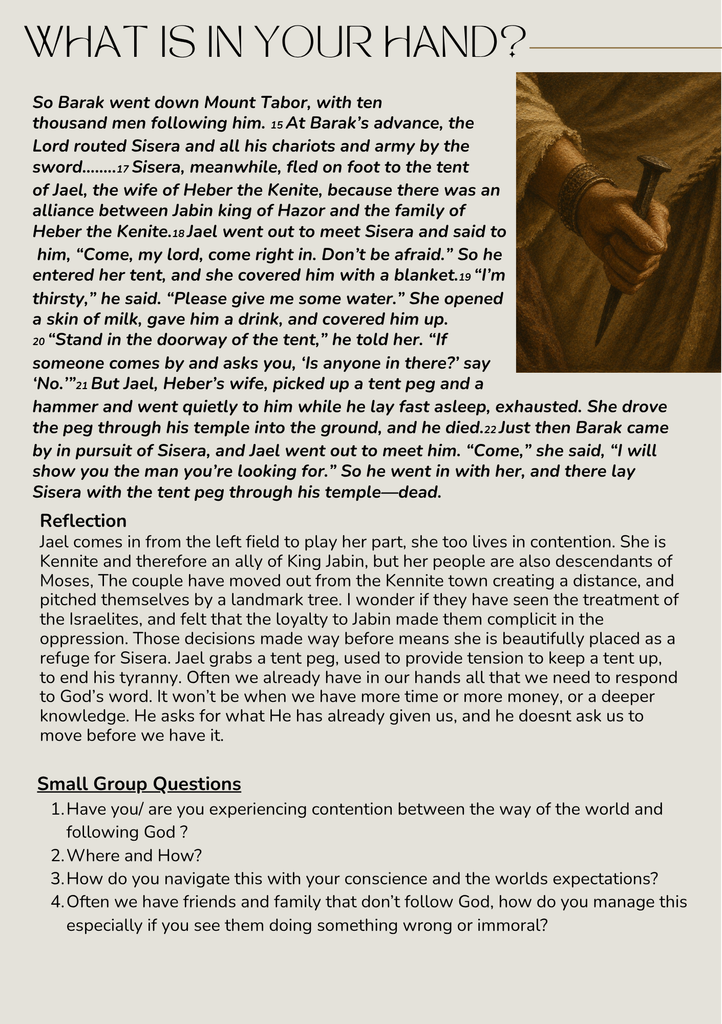
Jael comes out to greet the weary Sisera, “can I have water?” he says. She brings him milk and blankets, and he falls asleep in supposed safety to recover. It’s then that Jael picks up a hammer and a tent peg and drives it through Sisera’s head into the ground. Barak, who is pursuing Sisera, comes to find the deed is already done, and at the hands of a woman as foretold.
Has Jael, too, made a choice for peace-making – not peacekeeping. I feel challenged by this, the situation with Israel now and America’s speed to go to war, comes into my mind. Whether or not it’s a just war is so dependent on where we are sat. Labelling it as God’s will is so subjective, that I recoil at how grey this all seems. But with eyes set on Jesus, I’m called to love my enemies- but that’s not the same as putting up and shutting up, or maybe we believe it is.
This is still, however, a cause for celebration, peace has been won, which holds for the next 40years and so the next verses are Deborah’s song of Joy and thanksgiving and especially mentions how blessed Jael is.
So back to those eggs, broken to bring about a whole united omelette, peace has a cost, something has to be broken, taken down to make way or room for it, it can’t truly exist in the tension of maintaining.
I’m drawn to the Agnus Dei in Mass
Lamb of God – snap – you take away the sins of the world – have mercy on us
Lamb of God – snap- you take away the sins of the world – have mercy on us
Lamb of God – snap – you take away the sins of the world – grant us peace
For our peace Jesus was broken. I personally have had God bring down my entire life to bring about a true and lasting peace in it.
If you are in a battle right now, perhaps the Lord is actually making space for peace, His peace, one that surpasses all understanding
Download the small group resource here