There is the basic story here with some background to help it makes sense. But as always theres a deeper message that could be easy to missed.
So the scriptural story from Numbers 25.
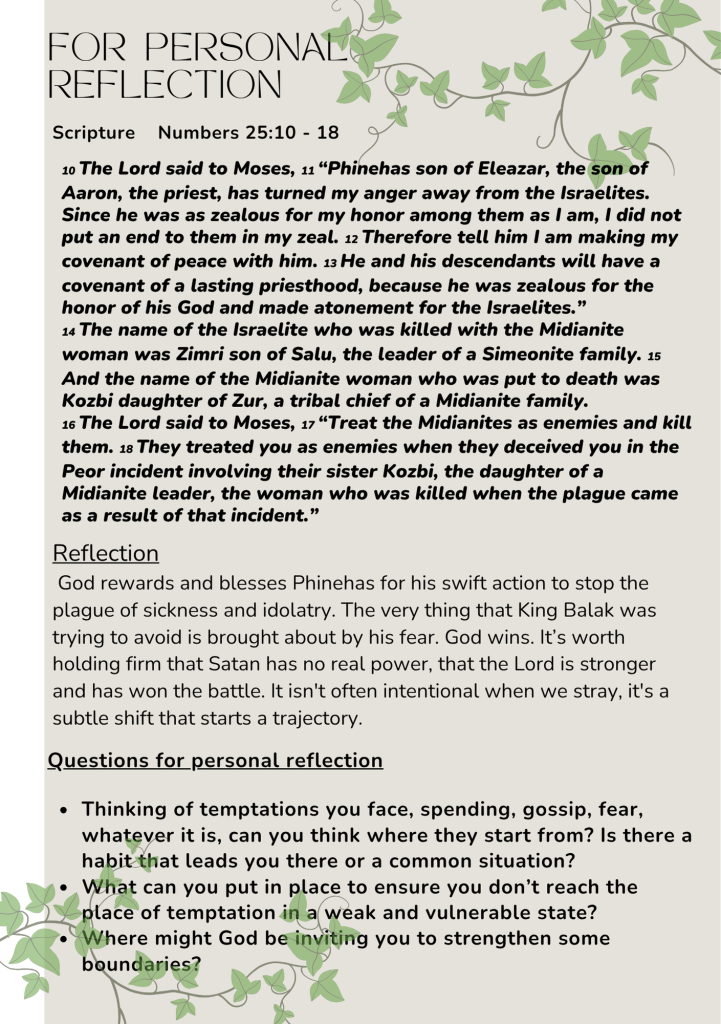
The Israelites are in Shittim, and on the borders of the land ruled by King Balak, of the Moabites. He starts to be fearful; they are a large tribe and could easily overthrow his domain. So, he tasks Balaam and his donkey to go and curse them. But God intervenes with Balaam and with his donkey and finds he can only utter blessings over Israel. Balaam returns and says “I can’t do it, but if you really want to bring these people down, their strength comes from their morality and obedience to Yahweh. Break that connection you break the people”
So, a plan is hatched and the Moabite women deliberately start to entice the Israelite men, first to sleep with them and then into idolatrous worship of Baal-Peor, their god.
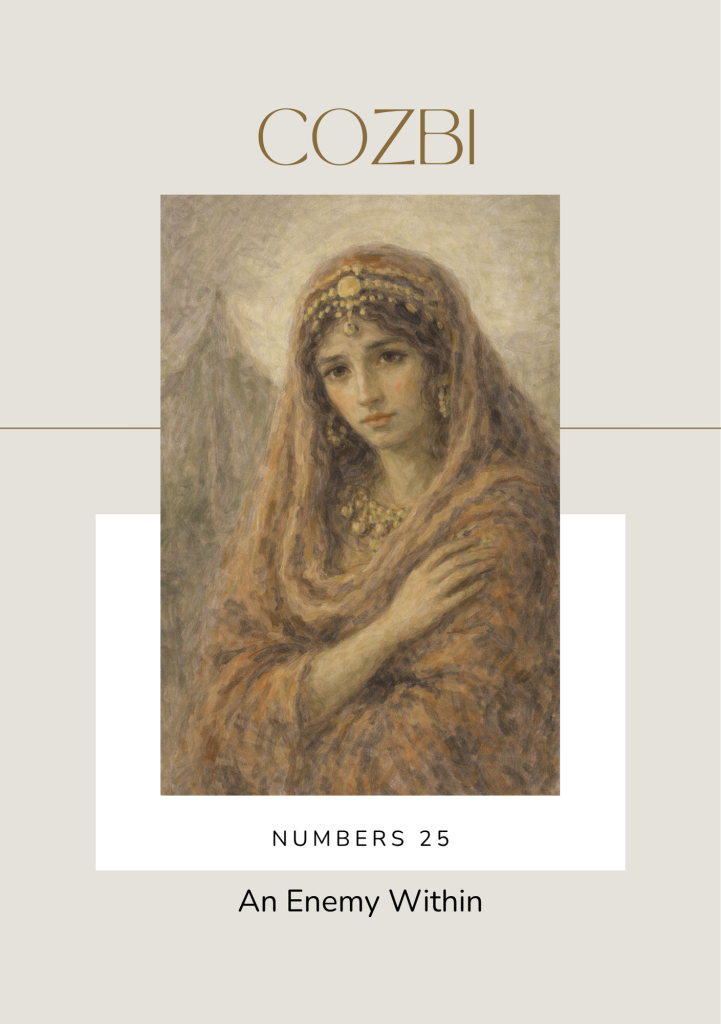
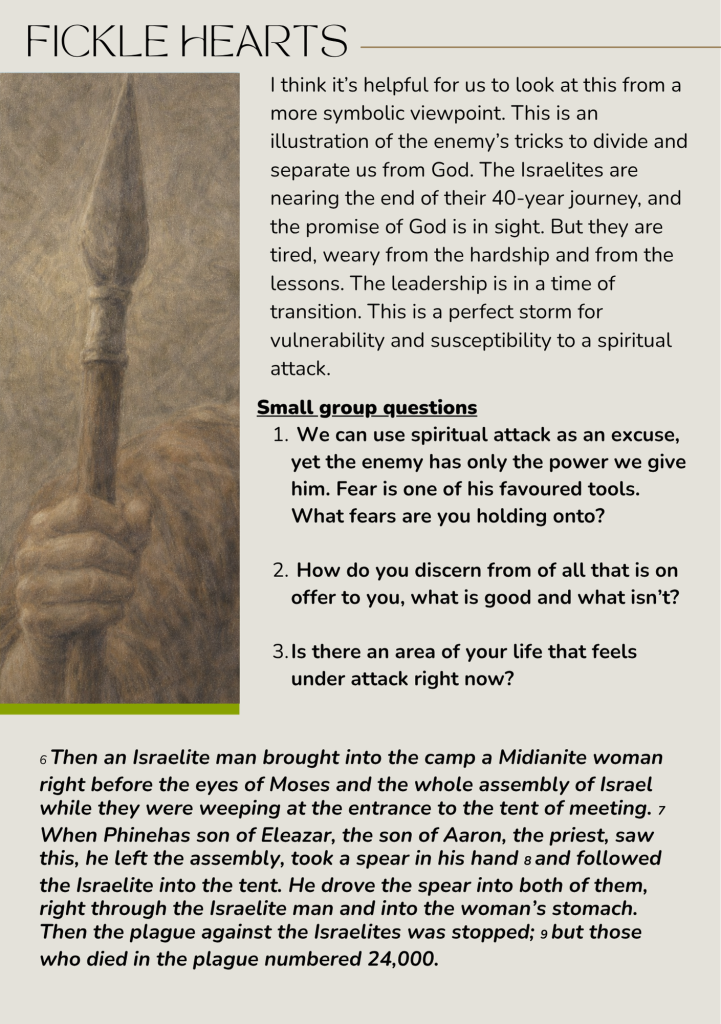
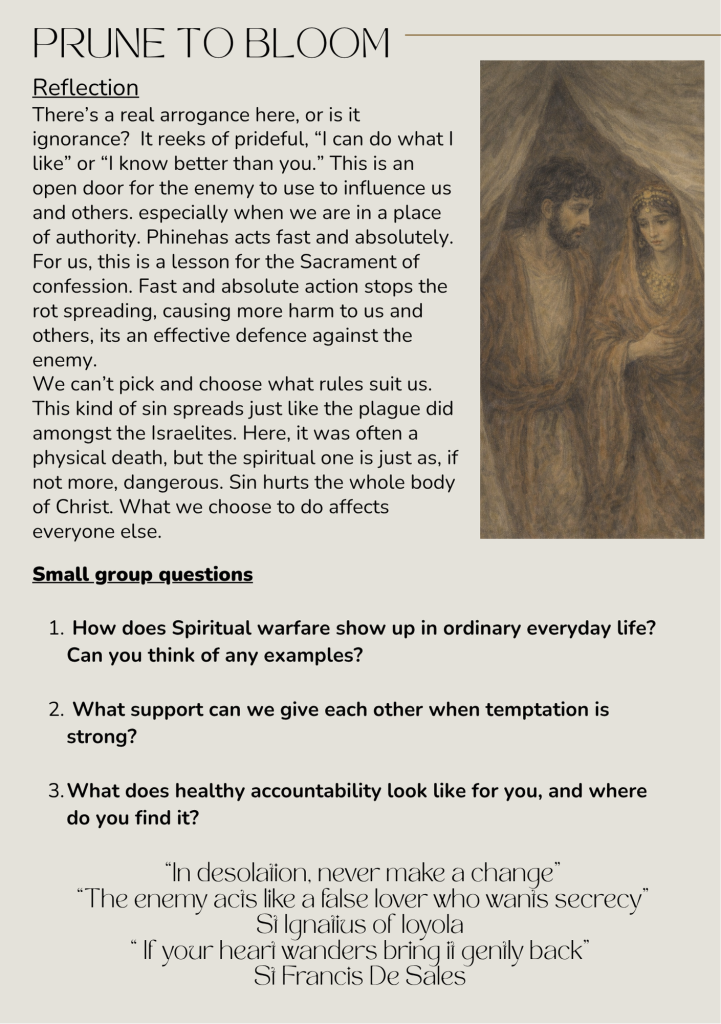
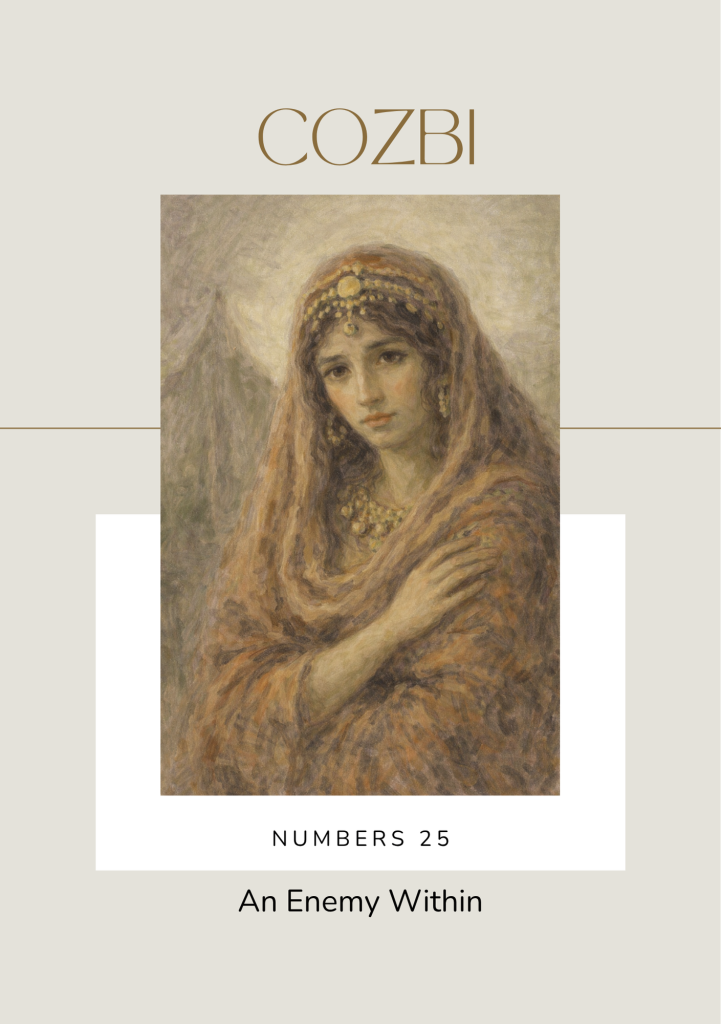
A plague overtakes the Israelites (not the same word as is used for the Egyptian plagues, but one referring to sickness). 24,000 of the Israelites die from this, so it is to be taken seriously. God instructs Moses on how to handle this; the leaders need to be publicly punished. The sin needs to be stamped out comprehensively. But even as they discuss this, Zimri, a leader of the tribe of Simeon, walks past with Cozbi into the tent right beside the tabernacle. Brazen and arrogant maybe? Phinehas, Aaron’s grandson, seizes a spear and marches into the tent. He spears them both, we are told the man through the woman. Which I think is significant. The plague ends with this killing.
Why is this wrong? Moses has a Midianite wife – remember Zipporah? I think this is because this marriage came from before the Torah laws forbidding it, to prevent idolatry. We see here why. I can’t help but wonder if this was used as a means of defence, an excuse by those who were enticed by the Moabites, if not to Moses, then maybe to themselves. I fear we often do that to justify something we know is wrong but want to do it anyway.
So the themes that have come to me through this story.
- The power of our sexuality as women, what should be a blessing, is often a weapon, used by us or against us. I have to wonder if it’s because in our fertility, we most resemble a Creator God who brings life into the world. The place where an attack is going to bear the most damage is here, the easiest place to twist and distort.
- Idolatry – the temptation to knock God off the throne for something easier, more pleasing, more self-serving.
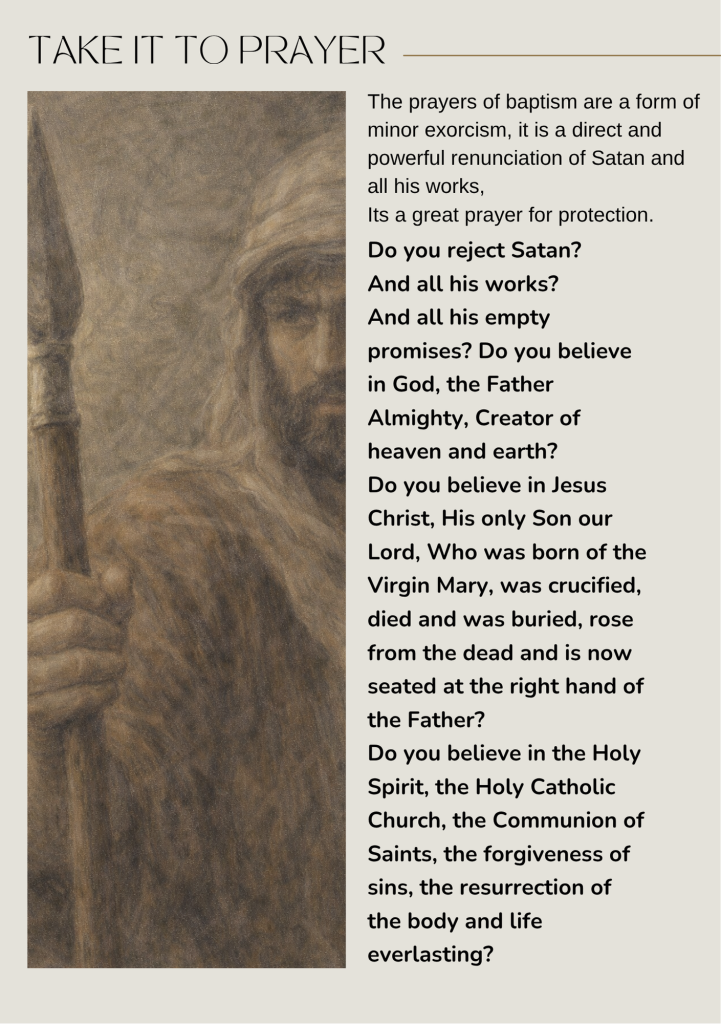
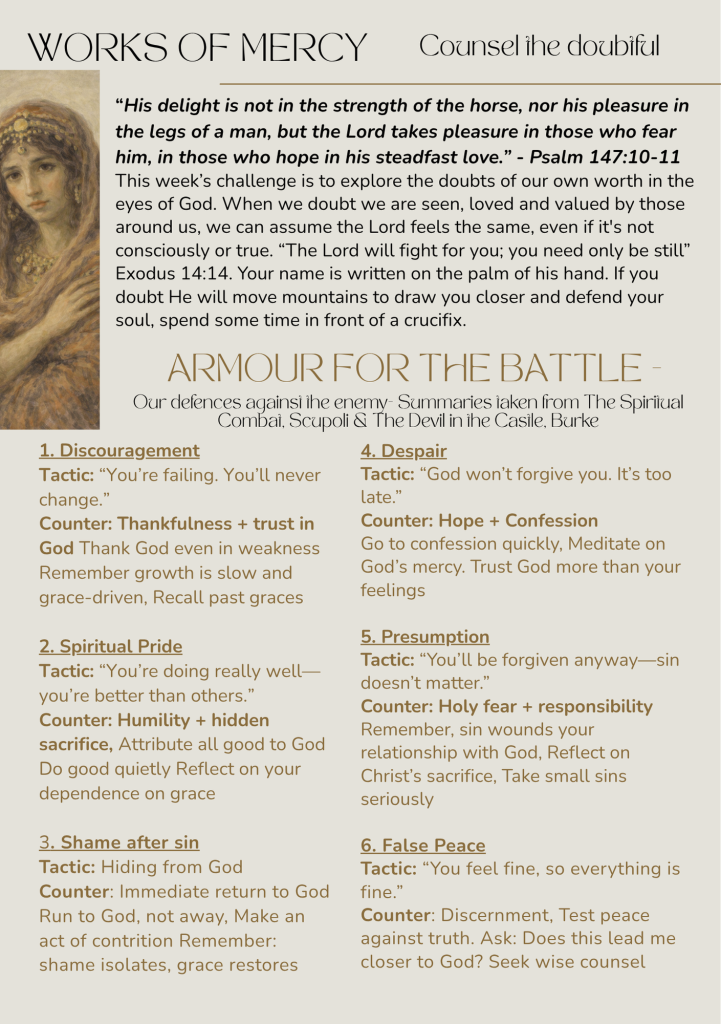
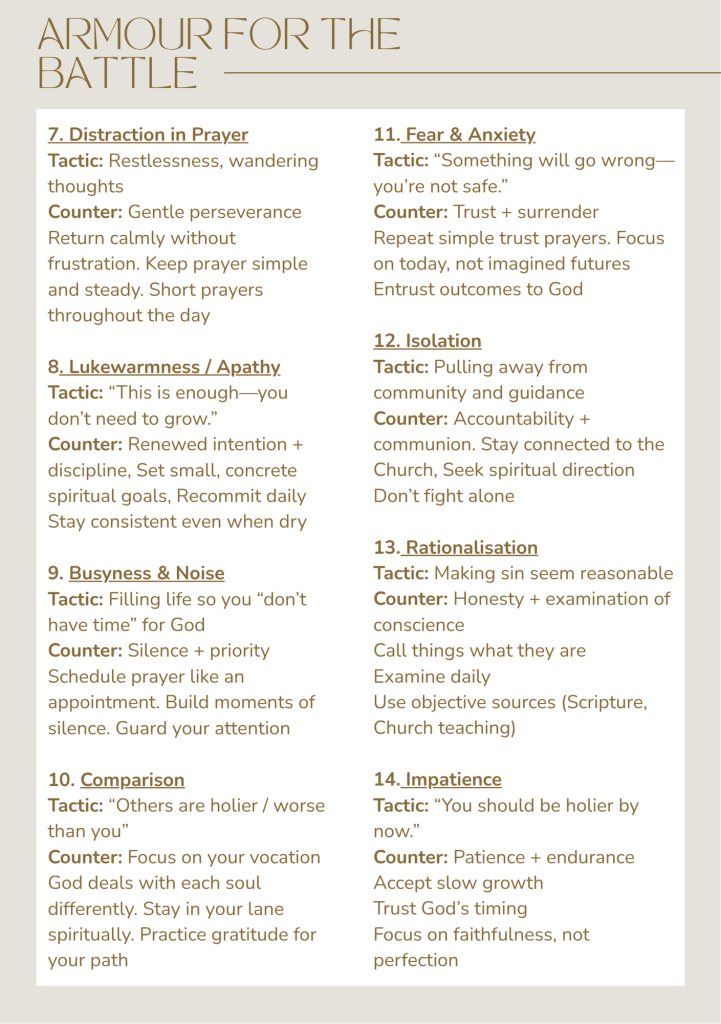
- Spiritual Warfare – how there is a textbook model in this story of how the enemy works, even today in an attempt to separate us from our God.
And for the Story of Cozbi, that’s where I am going to concentrate on, as it encapsulates the other themes anyway. Spiritual warfare is the term we use for the work of the enemy, Satan. The battle we often find ourselves in to sway us from clinging to God and keep walking in His ways. Dan Burke says, “The goal is not obsessing over evil but becoming more united with God and less easily thrown off course” I’ve used his books and the classic by Scupoli to give us this easy-to-understand list.
Remember our focus shouldn’t be on Satan, but some insight to his tricks can be helpful if we want to follow Jesus more closely and with some awareness.
1. The set up
Here we see that the direct approach doesn’t work; they were too savvy, and we are too savvy. If we were tempted to rob a bank, we would know that wasn’t right. Most likely we would refuse. The enemy uses more subtle tricks. Slight twisting of the truth,….maybe in this case it was, aren’t we supposed to love our neighbours, isn’t there some good in these people too, who made these rules up anyway, everyone else is doing it, if God hadn’t intended me to ….do this He wouldn’t have given me this desire, any of this sound even a little familiar? Deception is one of the enemy’s sharpest weapons; we fool ourselves and normalise wrong.
2. Temptation
When things feel hard or dissatisfaction creeps in, we are very vulnerable to a seemingly better offer. Here the Israelites have been in the desert for quite a time, nearly 40 years, the promised land dream probably still seemed some way off. It’s been a hard journey. So, something comforting and seductive that is placed in front of us as an option …. well, why not? This is how affairs in marriages start, this is how struggles can lead to gambling, alcohol, and addictions. Looking for the low-hanging fruit to oil life’s wheels a little. I’m sure its not a coincidence that Satan attacks in this way now, just before they cross the Jordan river into the promise. The leadership is in transition between Moses and Joshua, the people are tired maybe even starting to doubt, as a strategy for the enemy it’s a great time to strike.
3. Spiritual compromise
This is an agreement with the enemy or an invitation in because it might suit, or be a desirable thing. Here we find it’s become normalised, and that this compromise is at the leadership level. This is really dangerous. Maybe they are worshipping Baal, but you and I have been called to worship Yahweh in the way that He has set out for us. Compromise on this starts a decline in everything else. Idolatry is infidelity; our allegiance shifts to something or someone other than God. I think we are seeing this in the US right now. Often its not a strong decision but one that creeps up.
4. Division and contention
Some are following, others are not; a divided house falls, as Jesus tells us. By turning against each other, we are busy fighting each other, not the real enemy. How often do we see this in our churches, our families? This is the enemy at work, rubbing his grubby hands in delight. The enemy’s plan was to divide the Israelites from their God and from each other. Little knowing the infinite Mercy and patience that God has for His children and all who love Him.
And at the start of all this is fear. Fear of King Balak. A perceived threat. That, through being played by the enemy, became a self-fulfilling prophecy. God had to remove the threat from the borders, and the Moabites and the Midianites were subsequently crushed by the Israelite army. The command “do not fear” appears in scripture 365 times. Because fear is not of God, fear drives us to act irrationally and shows a mistrust in God. Maybe we have to grit our teeth and say “Jesus I trust in you” till we mean it. but that in itself is an act of trust.
All this eventually leads to death, perhaps not physical death but certainly a spiritual one as we sever our ties, thread by thread with the source of life. We are right back to the garden again aren’t we?
So this may seem like yet another woeful tale of God’s people going astray, for us it’s a story of the battle of the heart and a fight for gripping our identity.
Much of this battle I don‘t think we are aware is being fought, but for our good and His glory we are co-defenders of faith and truth, resisting the battle to let our environment shape our values, and the gradual wearing down of what we once knew was right.
A final note of hope however, and that’s the main focus of discussion this evening is that we are on the winning side, we have all we need to resist and to turn back if we have weakened.
You can download the small group resource here